
Watch the Latest Lessons
-

5 Ways to Improve your Fluency in English
Improving fluency in English can enhance workplace communication, presentations, and confidence. Techniques include shadowing native speakers, repeating phrases, conversing with fluent speakers, using language apps, and thinking in English. Practice and patience are key to… Read more
-

Understanding the Articulation of English Nasal Consonants
The video discusses the place of articulation of three nasal sounds in English, known as nasal occlusives or nasal stops. Nasals release air through the nose, not the mouth. The three voiced nasals are: /m/… Read more
-

Place of Articulation for Fricatives in English
This video explores the place of articulation of fricatives in English, categorizing them into 4 groups: labiodental, interdental, alveolar, and postalveolar, as well as the glottal fricative. Each group is described in terms of its… Read more
Looking for something specific?
Connected Speech
-
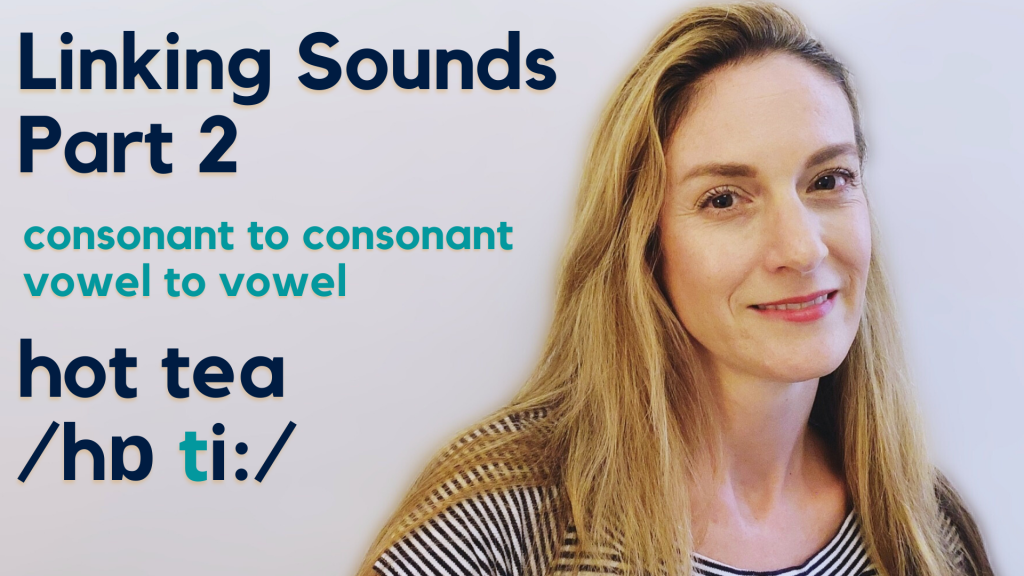
Linking Sounds Part 2 – Consonant to Consonant & Vowel to Vowel
The video teaches how to speak fluently by linking sounds, allowing words to flow together for faster, more natural speech. It illustrates how consonant sounds join between words and demonstrates linking between consonants and near… Read more
-
Dropped Consonants in English Pronunciation
In English, speaking quickly can lead to the loss of sounds, particularly at the end of words such as /t/ and /d/. This phenomenon, known as elision or dropped consonants, is common in connected speech.… Read more
-
Connected Speech: Vowel reduction, weak forms & the schwa sound /ə/
In this informative video, we explore how vowels change, uncover the schwa sound, and grasp weak forms in English. Understanding how sounds shift in unstressed parts of words is crucial for natural pronunciation. The guide… Read more
Vowels: Monophthongs
-
Vowel Sounds – Short ɒ & Long ɔ: in English pronunciation
A lesson on the short ɒ & long ɔ: monophthongs in English. Explore the world of short ɒ and long ɔ: sounds in our easy-to-follow video made just for English learners. This video breaks down… Read more
-
Vowel Sounds – The long ɜ: in English Pronunciation
A video about the long vowel sound /ɜ:/ – monophthong in English pronunciation. In our latest lesson for English learners, we shine a light on the often misunderstood ɜ: sound. This video is designed to… Read more
-

Vowel Sounds – Short ʌ & Long a: in English Pronunciation
A video about the short /ʌ/ and long /a:/ monophthong sounds in English. Join our easy-to-follow tutorial designed for English learners. In this lesson, we’ll focus on the short /ʌ/ and long /a:/ vowel sounds… Read more
Vowels: Diphthongs
-
The Diphthong /eɪ/ in English Pronunciation
This video teaches you how to form and produce the diphthong /eɪ/. Diphthongs are also called double vowel sounds because they are a combination of two monophthongs (= two single vowel sounds). In the diphthong… Read more
-

The Diphthong /əʊ/ in English Pronunciation
This video explains how the English diphthong /əʊ/ is formed by combining the central vowel sound /ə/ (= the schwa) with the near-close near-back rounded vowel /ʊ/ (funnily, this is also sometimes called the horseshoe… Read more
-

Triphthongs in English – diphthong & /ə/ combination in one syllable
This video explains what triphthongs are: a combination of three vowel sounds in one syllable. The usual pattern is: a diphthong + the central vowel sound /ə/ (= the schwa) all together forming one syllable,… Read more
Consonants
-
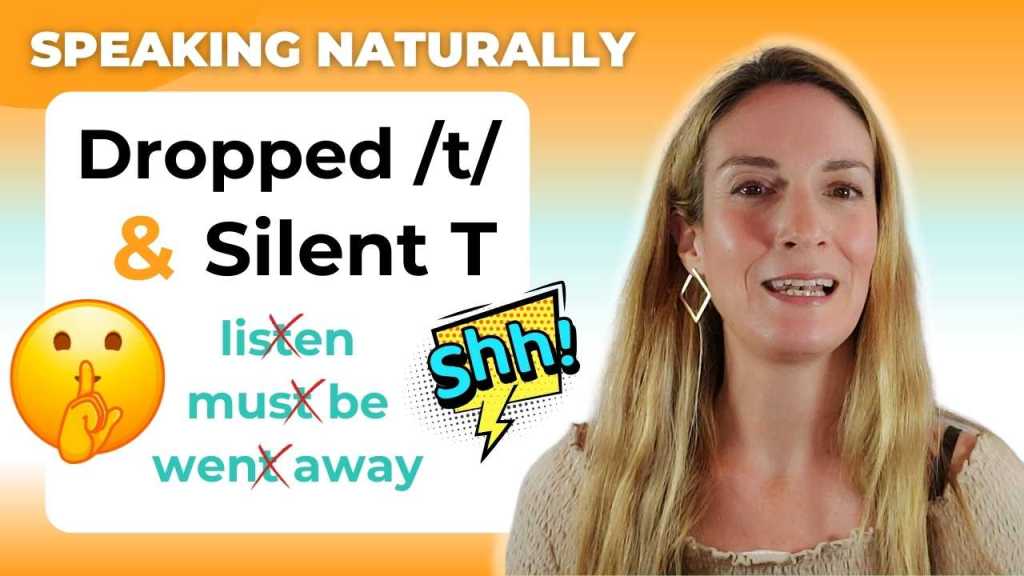
Dropped /t/ and Silent T: Linking in Pronunciation
In this video, the mystery of dropped /t/ and silent ‘T’ in English is unraveled, explaining why native speakers skip certain ‘T’ sounds. Viewers will learn tricks to make English speech sound natural, improving pronunciation… Read more
-

Glottal Stop /ʔ/ vs. the /h/ sound
In the video, we explore the differences between the glottal stop /ʔ/ and the sound /h/ in English. Both are voiceless glottal sounds formed at the space between the vocal cords. They share characteristics but… Read more
-

The Glottal Stop
The video discusses the glottal stop, a special sound in English, often found in regional accents like Cockney amongst others. It’s formed in the glottis, the space between the vocal cords in the throat. The… Read more
Phonology Topics
-
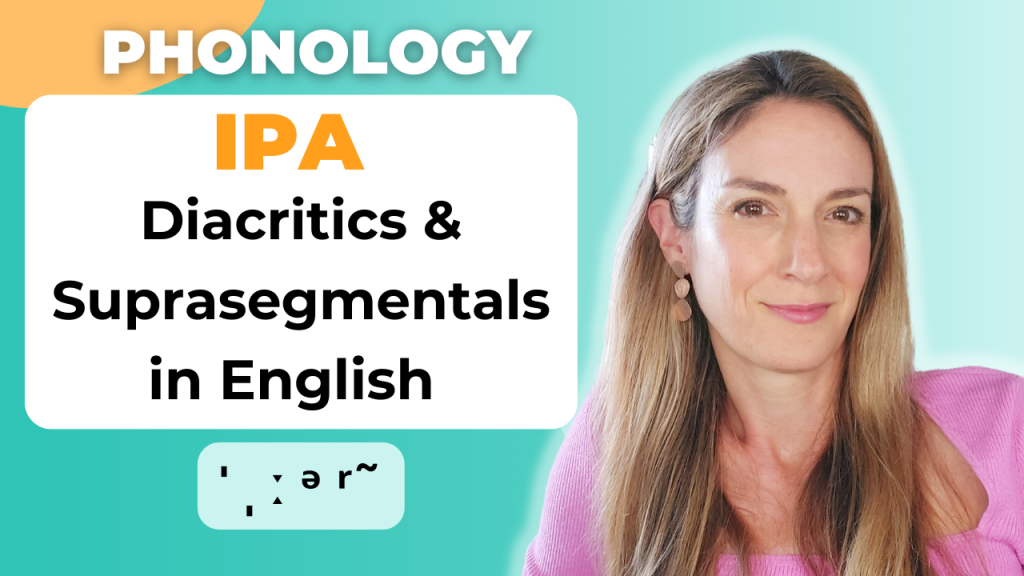
IPA Diacritics & Suprasegmentals in Phonemic Transcription
The video explores additional IPA symbols used in transcription, which are commonly seen in phonemic transcriptions. These symbols, apart from sound symbols, fall into two categories: suprasegmentals and diacritics. The video focuses on the most… Read more
-

What are Syllabic Consonants?
The video discusses syllabic consonants, a phenomenon where consonants take on the role of vowels in unstressed syllables to maintain the syllable status. In English, only the nasals /m/, /n/, /ŋ/ and the liquids /l/,… Read more
-
Syllable structure: What are onset, nucleus & coda?
The video explores syllable structure, comprising three components: onset (one or more consonant sounds at the beginning), nucleus (one vowel sound forming the core), and coda (one or more consonants at the end). A syllable… Read more
Intonation & Sentence Stress
-
The 4 Types of Sentence Stress
In this introductory video lesson, you will learn about the four types of sentence stress in English and how to use stress to emphasize important information. Understanding sentence stress is crucial as it conveys our… Read more
-

What are High Rise Terminals (HRT), Uptalk & Australian Questioning Intonation (AQI)
The video discusses a specific pattern of intonation known by various names such as high rising terminal, uptalk, and Valley Girl talk. This pattern is characterized by a rising intonation in statements, making them sound… Read more
-
Introduction to Intonation in English
The video provides an overview of intonation in English, focusing on pitch variations in speech. Intonation plays a crucial role in expressing meaning and attitude, shaping the message conveyed. Even simple words like ‘Hello’ can… Read more
Word Stress
Billie English on YouTube
With a library of over 290 videos as of 2024, ‘Billie English’ has amassed over 110k subscribers and 6 million views on YouTube, solidifying its status as a trusted resource for English learners and phonology enthusiasts worldwide.
In addition to its significant social media presence, Billie English offers a variety of online English classes and learning materials.


Meet Your Coach
Discover your English potential with Billie, your online accent reduction coach and English teacher. Master sounds, stress and intonation, and speak with confidence and fluency.
Our personalised classes focus on minimising native accents to ensure crystal-clear communication. Join our diverse clientele and benefit from expert guidance tailored to your individual needs, helping you become a confident English communicator and excel in your work and beyond.
 Billie English